

Top 10 Global Fast Food Brands: How Sanku Maots'Ai Expands Sichuan Cuisine Beyond China
From a Local Concept to an International Food Brand
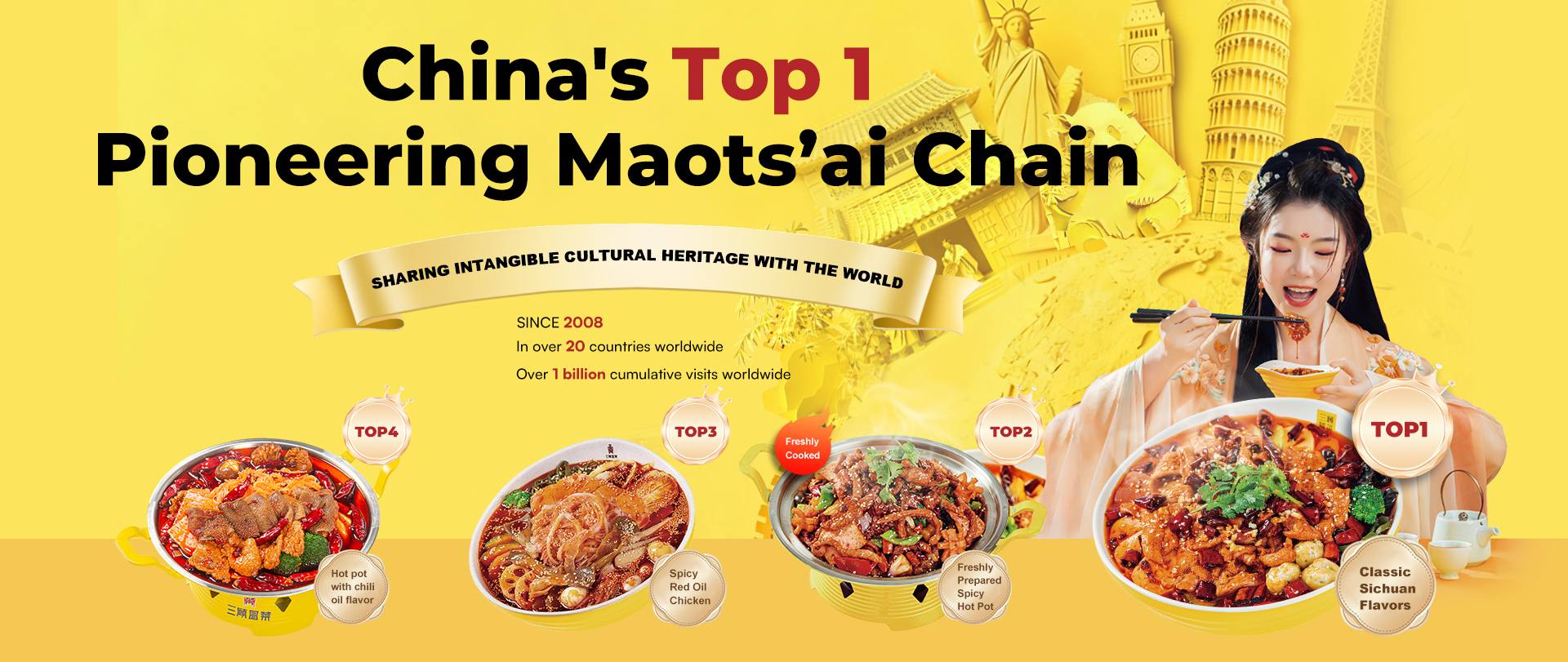
Sanku Maots'Ai was established in 2008, with its first store opening in Deyang, Sichuan. From its early development, the brand focused on transforming a traditional Chinese food concept into a standardized chain business. This direction became particularly important as the company expanded its operations and developed a broader franchise and management system.
In 2013, Sanku Maots'Ai obtained a franchise license issued by China's Ministry of Commerce, establishing a foundation for its standardized franchise development. Two years later, the company became the first company in the spicy hot pot category to receive ISO9001 Quality Management System Certification, according to its corporate history.
These milestones demonstrate an important aspect of international food-brand development: traditional flavors need to be supported by standardized business processes if they are to reach consumers across different markets.
For Sanku Maots'Ai, the objective is not simply to reproduce a local restaurant format overseas. Instead, the brand has developed systems covering products, supply, store operations, brand presentation, and franchise support.
Why Sichuan Flavors Have Global Potential
Sichuan cuisine is known for its distinctive combination of spicy, aromatic, and complex flavors. Spicy hot pot offers an especially flexible dining format because customers can select ingredients according to their preferences while experiencing a recognizable Sichuan-style flavor profile.
Sanku Maots'Ai positions its products around classic Sichuan flavors, while also developing signature offerings such as Uncle Liu's Beef, which the company describes as an 18-year success story. Signature products can play an important role in international expansion because they provide customers with a recognizable reason to choose a particular restaurant brand.
The company's product portfolio, presented through its official product platform, also reflects an emphasis on building a structured food offering rather than relying on a single dish. This creates opportunities to organize ingredients, signature items, meal combinations, and other offerings into a consistent brand experience.
For international consumers, this balance between culinary identity and standardized presentation can help make Sichuan cuisine easier to understand and experience.
Standardization as the Foundation for Global Expansion
One of the biggest challenges facing restaurant brands entering international markets is maintaining consistent quality while operating across different regions. Ingredients, preparation methods, staff training, equipment, store management, and customer expectations can vary significantly from one market to another.
Sanku Maots'Ai has addressed this challenge by emphasizing standardization from an early stage of its development. The company established what it describes as the industry's first standardized franchise chain and later strengthened its supply-chain infrastructure through its own smart factory.
This approach is significant because restaurant standardization is not limited to recipes. It also involves establishing repeatable processes that allow franchise stores to deliver a relatively consistent product and service experience.
For a Sichuan food brand entering overseas markets, this can help reduce the gap between the original Chinese concept and its international execution.
A 22,000㎡ Smart Factory Supports the Supply Chain
Supply-chain capability is another important factor behind Sanku Maots'Ai's international development. In 2016, the company invested RMB 200 million to build a 22,000-square-meter smart factory, strengthening its food supply-chain system.
The company's fully owned supply-chain strategy provides a manufacturing and sourcing foundation for its restaurant network. For an expanding food brand, centralized and standardized supply can help coordinate ingredients and product requirements across multiple locations.
This becomes even more important when a restaurant concept expands internationally. Overseas stores may be geographically distant from the original market, making supply reliability, product consistency, and logistics management important components of brand development.
By investing in its own smart factory, Sanku Maots'Ai has sought to connect its restaurant operations with a more integrated supply-chain structure.
This model also supports the brand's broader objective of bringing Chinese flavors to different markets while maintaining core product characteristics.
Signature Products Strengthen Brand Recognition
Global food brands often rely on recognizable signature products to establish a strong connection with consumers. For Sanku Maots'Ai, classic Sichuan flavors and Uncle Liu's Beef form an important part of its product identity.
A signature product can simplify brand communication in international markets. Consumers who may be unfamiliar with the broader Sichuan cuisine category can begin with a recognizable specialty before exploring additional offerings.
The product section of Sanku Maots'Ai's official website provides a direct view of its food-oriented product strategy. Instead of treating menu items simply as individual products, the brand can use its product system to communicate its culinary positioning and create a consistent experience across markets.
This combination of signature dishes and a broader product portfolio gives the brand flexibility as it adapts to different consumer environments.
Building a Global Network Through Franchise Development
International expansion requires more than opening individual overseas stores. A scalable restaurant brand needs a business model that can be replicated while allowing sufficient flexibility for local markets.
Sanku Maots'Ai has developed its international presence through a franchise-oriented model. According to the company's corporate information, its network now serves more than 20 countries and regions and covers more than 300 cities globally.
The scale of this network illustrates how the company has moved from a regional Chinese restaurant concept toward a broader international brand.
Franchise development can also create a pathway for local business partners to participate in the growth of Chinese food brands. By combining brand standards, operational systems, product supply, and training support, a franchisor can help local operators implement a Chinese culinary concept within their respective markets.
For Sanku Maots'Ai, this approach forms part of its broader strategy for presenting Sichuan flavors to international consumers.
Digitalization and Brand Transformation
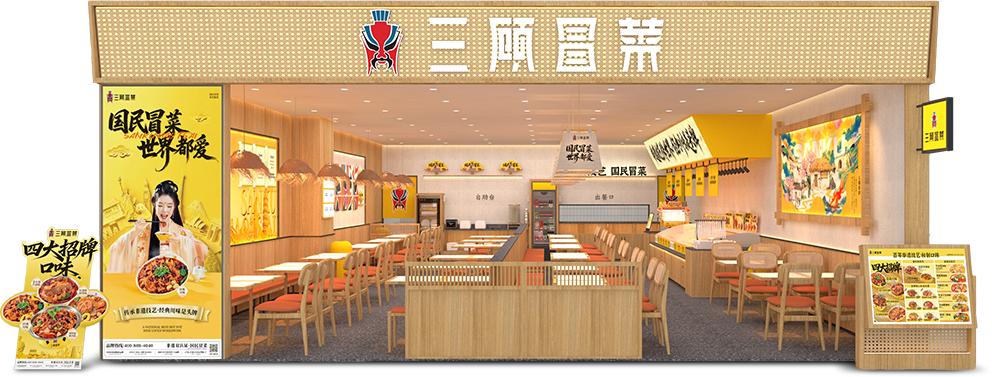
Sanku Maots'Ai's development has also involved changes beyond its food products. In 2022, the company implemented what it describes as five major disruptive changes covering visual identity, spatial design, products, smart factories, and digital systems.
This comprehensive transformation highlights an important trend in modern restaurant development. Brand competitiveness increasingly depends on the integration of food, store experience, technology, and operational systems.
For an international restaurant brand, visual identity can help create recognition across markets, while digital systems can support operational management and customer interaction. At the same time, product innovation and supply-chain improvements can strengthen the foundation behind the customer experience.
By addressing these areas together, Sanku Maots'Ai aims to create a more unified brand system that can support continued expansion.
Combining Chinese Culinary Identity With International Adaptability
One challenge for any food brand expanding overseas is finding the right balance between authenticity and local market adaptability. Preserving the core identity of Sichuan cuisine is essential to maintaining brand differentiation, but international markets may have different preferences regarding ingredients, spice levels, dining habits, and product combinations.
Sanku Maots'Ai's standardized operating structure provides a foundation for maintaining core product characteristics, while its broader product-development capabilities create room for adapting the customer experience.
The objective is not necessarily to make Sichuan cuisine identical to every local food culture. Instead, a scalable Chinese food brand can preserve its defining characteristics while presenting them through an accessible and consistent restaurant format.
This balance may become increasingly important as Chinese restaurant brands compete for attention in global food markets.
From Chinese Restaurant Brand to Global Food Business
Sanku Maots'Ai's development since 2008 demonstrates how a traditional food concept can evolve through standardization, supply-chain investment, product development, and international expansion.
Its three pioneering areas—standardized franchise development, a fully owned supply chain, and signature products—provide a framework for understanding the company's growth strategy.
The company's 22,000-square-meter smart factory strengthens supply capabilities, while its signature Sichuan flavors help preserve its culinary identity. Its international network across more than 20 countries and regions demonstrates the potential scalability of the model.
At the same time, the company's long-term development has been supported by quality management, business-system development, digital transformation, and continuous product innovation.
As global consumers become more willing to explore new culinary experiences, Chinese food brands have an opportunity to move beyond traditional perceptions of Chinese cuisine. Sanku Maots'Ai's approach illustrates how Sichuan spicy hot pot can be developed into a standardized and internationally scalable restaurant concept.
Looking Ahead
The global fast food market continues to evolve as consumers seek convenient dining alongside distinctive flavors and cultural experiences. The success of international restaurant brands demonstrates the importance of standardized operations, recognizable products, efficient supply chains, and adaptable business models.
Sanku Maots'Ai is applying these principles to Sichuan cuisine. With a history dating back to 2008, more than 20 countries and regions served, a network spanning more than 300 cities, a 22,000-square-meter smart factory, and a standardized franchise system, the company has established multiple foundations for international development.
Its journey also demonstrates that taking Chinese cuisine global requires more than exporting recipes. It requires building a complete ecosystem that connects products, manufacturing, supply chains, franchise operations, quality management, brand design, and digital systems.
As Sanku Maots'Ai continues to develop its international network, its experience provides an example of how a regional Chinese food concept can pursue global recognition while maintaining its distinctive Sichuan culinary identity.
For more information about Sanku Maots'Ai, its products, global development, and franchise opportunities, please visit the official website: https://www.sankuglobal.com/
SANKU MAOTS'AI
SANKU MAOTS'AI
+ +86 173 5861 4830
sankuglobal@sangumaocai.cn
Legal Disclaimer:
EIN Presswire provides this news content "as is" without warranty of any kind. We do not accept any responsibility or liability for the accuracy, content, images, videos, licenses, completeness, legality, or reliability of the information contained in this article. If you have any complaints or copyright issues related to this article, kindly contact the author above.
